
Borders on a map may seem permanent, but history proves otherwise. Nations have risen, fallen, merged, and even vanished entirely over time.
From vast empires to tiny micronations, here are ten countries that once existed but have since disappeared — and the stories behind their decline:
1. Prussia
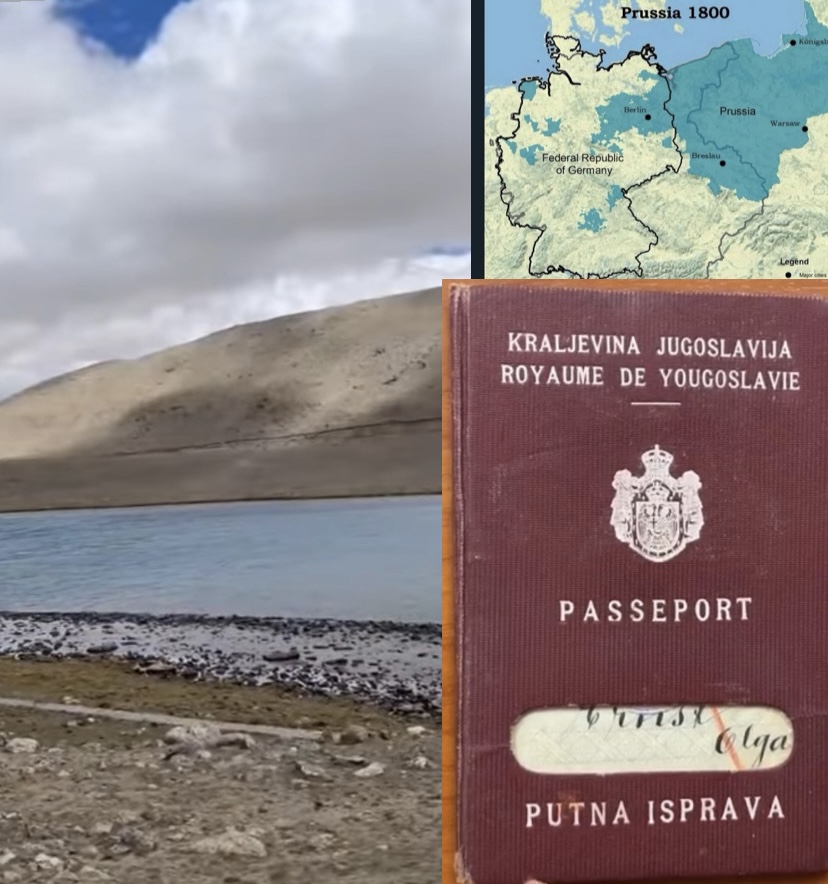
Once a dominant kingdom in Europe, Prussia played a major role in shaping modern Germany. Founded in 1525 and ruled by the Hohenzollern dynasty, it became a powerful force during the 18th and 19th centuries. However, after World War I and World War II, Prussia lost both influence and territory. In 1947, the Allies officially abolished it, marking the end of its existence.
2. Yugoslavia
This Balkan federation consisted of six republics: Bosnia and Herzegovina, Croatia, Macedonia, Montenegro, Serbia, and Slovenia. Ethnic tensions and political rivalries tore the country apart during the 1990s. By 2006, all six republics had declared independence, leaving Yugoslavia as nothing more than a memory.
3. Tanganyika
Located in East Africa, Tanganyika was colonized first by Germany and later by Britain. In 1964, it merged with Zanzibar to form Tanzania. Today, Tanganyika’s name survives only in history books and old postage stamps.
4. Czechoslovakia
Formed in 1918 after the collapse of Austria-Hungary, Czechoslovakia became one of Eastern Europe’s most industrially advanced nations. However, decades of Nazi occupation and later Communist rule weakened the country. In 1993, it peacefully split into two independent nations: Czechia and Slovakia.
5. Neutral Moresnet
Measuring just 1.5 km wide, Neutral Moresnet was a tiny European microstate created in 1816 due to a dispute over a zinc mine. Known for low taxes, gambling loopholes, and the absence of a formal legal system, it attracted thousands of residents. In 1915, Germany annexed the territory, ending its unusual independence.
6. Abyssinia
Also called the Ethiopian Empire, Abyssinia was a Christian kingdom dating back to the 13th century. It grew through military conquests and religious expansion, but in 1974, Emperor Haile Selassie was overthrown, marking the fall of Abyssinia. Today, modern Ethiopia occupies much of its former land.
7. Tibet
Once an independent state, Tibet declared autonomy in 1911. However, in 1951, China invaded the region, forcing Tibet under its control. Following an uprising in 1959, the Dalai Lama and thousands of Tibetans fled into exile. While Tibet remains under Chinese administration, calls for independence continue globally.
8. Austria-Hungary
This massive empire spanned Central Europe from 1867 to 1918, housing 11 different nationalities. Political instability, food shortages, and the devastation of World War I led to its collapse. Afterward, the empire’s lands were divided into several nations, including Austria, Hungary, and Czechoslovakia.
9. Southern Rhodesia
Named after British imperialist Cecil Rhodes, this African territory was defined by white minority rule and deep racial inequality. After years of resistance, Southern Rhodesia declared independence in 1965. Eventually, it was divided into two modern countries: Zimbabwe and Zambia.
10. Sikkim
An ancient Himalayan kingdom ruled by the Namgyal dynasty since 1642, Sikkim experienced multiple wars with Bhutan and Nepal, alongside British interference. It became an Indian protectorate in 1950 and was fully integrated into India as the 22nd state in 1975.
SEE MORE RELATED NEWS :