
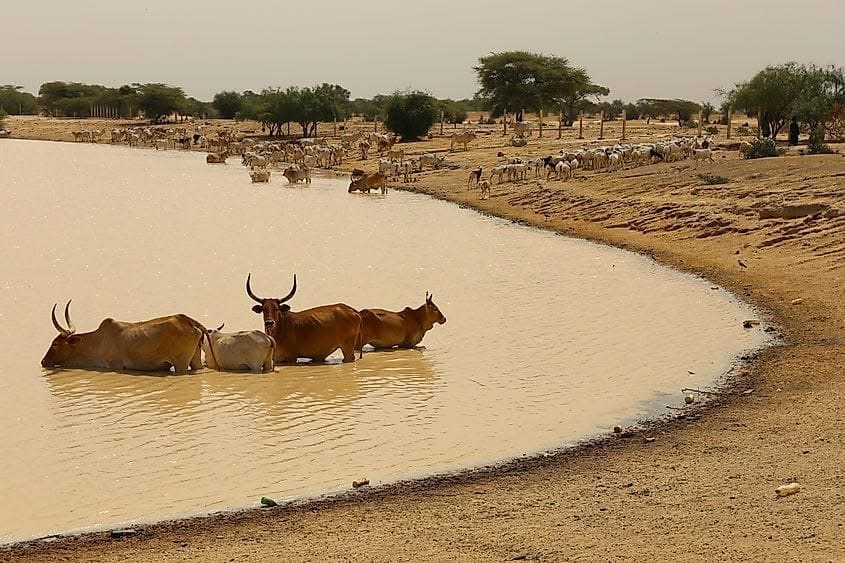
The World’s Hottest Countries in 2025
Our planet’s hottest countries in 2025 stretch from the sunbaked Sahel to the blazing Arabian Gulf and the tropical Caribbean, where scorching temperatures define everyday life.
Using average land-surface temperatures from Trading Economics, this ranking highlights the regions where the heat rarely drops below 28°C throughout the year.
West Africa leads the list, with Burkina Faso emerging as the world’s hottest country in 2025 at nearly 30°C.
Below are some of the top ten hottest countries in 2025, according to data from WordAtlas:
1. Burkina Faso — 29.96°C
Landlocked and low-lying, Burkina Faso’s heat is intensified by the dry Harmattan winds blowing from the Sahara. With limited rainfall and sparse vegetation, the northern plains often endure weeks of 40°C daytime highs. Despite this, locals adapt through early-morning farming routines and traditional mud-brick homes that naturally cool interior spaces.
2. Mali — 29.72°C
Mali’s desert landscape, particularly around Timbuktu, makes it a natural furnace. The mix of sand dunes, low humidity, and long dry seasons keeps it among the world’s hottest nations. However, the Niger River valley offers some relief, sustaining agriculture and life in an otherwise harsh climate.
3. Senegal — 29.69°C
Senegal’s tropical latitude and proximity to the Sahara contribute to its heat, especially inland. Yet, coastal breezes from the Atlantic help moderate temperatures in cities like Dakar. The country’s blend of arid and coastal climates makes it both scorching and dynamic, with energy-efficient building designs gaining traction to counter the heat.
4. Mauritania — 29.37°C
Stretching from the Atlantic coast deep into the Sahara, Mauritania’s vast deserts shape its climate. The sun dominates, with intense radiation and minimal rainfall. Most residents live near Nouakchott, where sea breezes offer slight relief—but only enough to soften the furnace-like atmosphere.
5. Gambia — 29.16°C
Africa’s smallest mainland country lies within Senegal along the Gambia River. A mix of tropical humidity and strong sunlight makes the air thick and hot. The river sustains local farming, but during dry months, Gambia feels just as sweltering as its larger Sahelian neighbors.
6. Qatar — 29.07°C
Qatar’s futuristic skyline rises from the desert, where summer daytime temperatures surpass 45°C. The Gulf nation relies heavily on air-conditioning—indoors, in cars, and even in open-air stadiums. Despite its technological solutions, Qatar remains one of the planet’s most heat-stressed environments.
7. United Arab Emirates — 28.95°C
The UAE’s desert cities, such as Dubai and Abu Dhabi, experience extreme summer heat worsened by concrete and glass structures. The country’s wealth enables it to fight back through advanced cooling systems and modern urban planning, though the open desert beyond remains intensely hot.
8. Bahrain — 28.88°C
This island nation in the Persian Gulf combines maritime humidity with desert heat. Bahrain’s coastal position traps moisture and warmth, creating sticky, oppressive summers. Sea breezes bring limited comfort, but modern infrastructure ensures that life continues under the blazing sun.
9. Guinea-Bissau — 28.7°C
Located on the Atlantic coast of West Africa, Guinea-Bissau’s heat comes with high humidity. The tropical climate, tempered slightly by the ocean, remains consistently hot year-round. Mangrove forests and seasonal monsoon rains occasionally interrupt the otherwise steamy atmosphere.
10. Benin — 28.61°C
Benin’s blend of tropical savannas and coastal lowlands exposes it to both dry and humid heat sources. Harmattan winds parch the north, while the south bakes under humid sunshine. Traditional shaded courtyards and siesta culture help residents adjust to the unyielding warmth.
SEE MORE RELATED NEWS:
• 10 countries that no longer exist – and What Led To Their Collapse