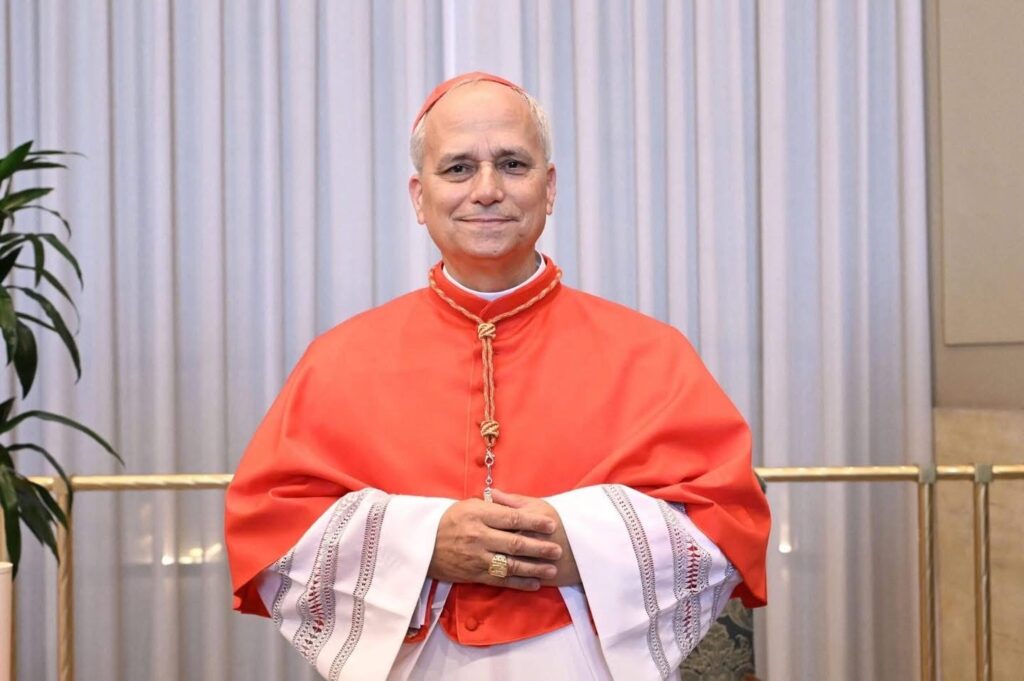

Benin’s finance minister has secured a decisive victory in a presidential election, according to provisional results, keeping the coastal West African nation on track after a decade of strong economic expansion.
Wadagni represents continuity with the administration of outgoing president Patrice Talon, during which the country has recorded fast economic growth, rising tourism activity, and the delivery of several major infrastructure projects.
He still faces significant challenges, including a wide wealth gap and rising insecurity in the north driven by attacks attributed to jihadist groups.
The 49-year-old technocrat was widely expected to succeed Talon, who personally backed him, and he also had the support of both parties in the ruling coalition.
He went up against a single minor challenger, Paul Hounkpe, who ran a quiet campaign and accepted defeat while votes were still being counted.
“To… Romuald Wadagni, I offer my republican congratulations. Democracy requires mutual respect and the ability to rise above partisan divides,” Hounkpe said in his concession statement.
Benin’s independent electoral commission, CENA, said he obtained over 94 percent of the vote in provisional figures released overnight from Monday into Tuesday, based on 90 percent of ballots counted.
The constitutional court is expected to release final results from Sunday’s election later in the week.
CENA and the Economic Community of West African States (ECOWAS) stated that the election was peaceful and conducted smoothly.
- No surprise –
However, newspaper Le Patriote pointed to “signs of an electoral heist” and an election monitoring platform reported claims of ballot boxes appearing already filled before voting began.
The electoral commission said turnout was close to 60 percent.
The main opposition Democrats party failed to obtain the necessary parliamentary backing to present a candidate.
Hounkpe required endorsements from several majority lawmakers in order to appear on the ballot.
“The results are no surprise,” said legal practitioner Hilaire Okounde. “Wadagni had no opposition. He could have got 99 percent.”
“The public has opted for continuity in modernisation, sound management and a commitment to development,” said Augustin Salanon, a port official who supported Talon’s chosen successor.
Democrats activist Astrid Kounouho said: “I’m not pleased with this result but the fact is that Romuald Wadagni is now the president-elect.”
“As a member of the opposition, I contest the conditions under which this election took place, the lack of political openness and the absence of genuine pluralism.
“But the country is greater than our differences and we expect him to govern for everyone,” she said.
Alimata, a lock seller in the Gbegemey neighbourhood of Cotonou, took a practical stance.
“If this election or Wadagni’s arrival can change our lives, we shall be happy but for now, we have to find a way to feed the family,” he told AFP.
Challenges ahead –
Talon, who has governed Benin since 2016, is stepping down after completing two five-year terms.
This marks Wadagni’s first attempt at elected office.
During his 10 years as finance minister, Benin’s public finances were cleaned up and the fiscal deficit reduced by a third to around three percent of GDP.
With economic growth averaging above six percent over the decade, Wadagni and Benin have gained confidence from international investors.
As president “he will follow in the continuity of what has been done”, political analyst Franck Kinninvo said.
Major difficulties still lie ahead.
The poverty rate is estimated at over 30 percent, and many citizens have not experienced the benefits of growth.
Benin’s development will also depend on security, particularly addressing violence in the north linked to Al-Qaeda’s Sahel branch, the Group for the Support of Islam and Muslims (JNIM).
The next elections are scheduled for 2033 after a constitutional reform extended the presidential term to seven years.